AirJet or HydroJet: the bubble system explained
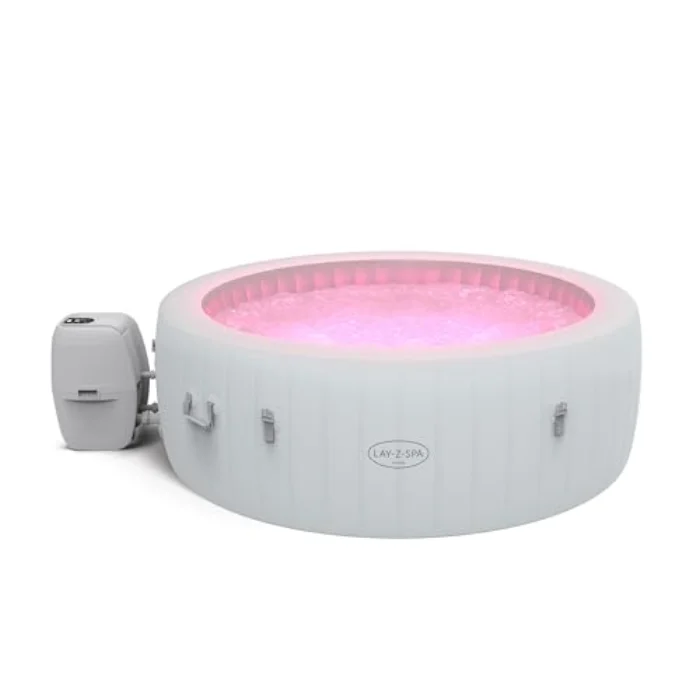
The first choice is the type of massage system, and it matters more than the marketing suggests. There are two kinds. An AirJet or bubble system, found on the Lay-Z-Spa and Bestway tubs we tested, pumps air through a ring of jets around the floor of the tub to create an all-over fizz. It is quieter, draws less power and is perfectly relaxing for an evening soak. A HydroJet system instead pumps heated water through a small number of targeted nozzles to massage your back and legs, which feels closer to a fixed spa, but it costs more to buy, uses more electricity and is found mostly on the dearer Pro models.
For the vast majority of buyers, AirJet is the right answer. The bubbles are all the massage most people want, and choosing AirJet keeps both the purchase price and the running cost down. None of the six tubs we recommend is a HydroJet model for exactly that reason. Only choose a HydroJet tub if a focused, fixed-spa-style back massage is the whole reason you are buying; if you simply want to relax in warm, bubbling water, an AirJet tub is the smarter and cheaper spend.
Capacity and size: do not oversize
The headline capacity is the squeeze-in maximum, not the comfortable number, and getting it right is the single easiest way to save money. Take the figure on the box and subtract two for genuine comfort: a six-person tub like the Lay-Z-Spa Paris seats four adults comfortably and six for a get-together, while a four-person tub such as the Bestway Lay-Z-Spa Bali is a roomy soak for two and fine for four sitting upright. The compact Wave Spa Atlantic at 600 L is really a couple's tub.
Size matters for two reasons beyond comfort. First, footprint: a six-person tub is around 196 to 204 cm across, so you need a flat, supportive area of at least roughly 2.6 by 2.6 metres, while a small tub fits a modest patio. Second, and more importantly, running cost: the more water a tub holds, the more energy it takes to heat and to keep warm. A 930 L tub like the MSpa Comfort Bergen simply costs more to run than a 600 L one, all else being equal. The rule is simple: buy for your typical evening, not your once-a-year party, and you will spend less every month. Our six-person guide covers the larger options if you genuinely need them.
Heat retention and running cost: the figures that matter most
If you remember one thing from this guide, make it this: buy on heat retention, not bubble count. Heat retention is how slowly a tub loses warmth, and it is the figure that decides both your comfort and your bill, yet manufacturers almost never publish it. We measure it ourselves by heating each tub to 40°C, switching the heater off, putting the lid on and logging the temperature every fifteen minutes. The spread is large: the best tub on test, the Lay-Z-Spa Paris, lost only 1.4°C an hour, while a thinner-walled budget tub shed closer to 2.5°C. Every degree lost is a degree the heater must put back, so a tub that holds heat well runs its heater less and costs less.
Running cost follows directly from heat retention, water volume and your own insulation. Over a mild month, the tubs we tested cost between about £34 and £48 to run, with the small-volume Wave Spa Atlantic cheapest and the large MSpa Comfort Bergen dearest. Heater wattage, between 1,600 and 2,200 W on our tubs, affects how fast a tub heats but not directly how much it costs to hold temperature, which is governed by heat loss. Your own habits move these figures more than the tub does: a good insulating lid, an insulating ground mat and a sheltered, out-of-the-wind position can cut a monthly bill by a fifth. Our dedicated running costs guide goes into the numbers and the insulation tricks in detail.
Build quality, water care and what comes in the box
Build quality is easy to overlook and important to get right. The cheapest tubs use thinner single-wall material that flexes when you lean on it and sheds heat faster; better tubs use multi-ply walls (Lay-Z-Spa's DuraPlus, Intex's mesh-reinforced Fiber-Tech) that feel firmer and insulate better. The most solid feel comes from a rigid frame, as on the MSpa Comfort Bergen, which braces the walls so the structure barely flexes. Check what cover the tub comes with too: a thick, well-fitting insulating lid is worth real money in running costs, and a thin one means you should budget for a separate insulating ground mat.
Water care is part of owning any hot tub. You will need a sanitiser (chlorine granules or bromine tablets) to keep the water safe, test strips to check the level, and pH adjusters to keep it balanced around 7.2 to 7.6, in line with the kind of water-hygiene guidance published by bodies such as the Health and Safety Executive for spa pools. Some tubs reduce the chemical workload: the MSpa Comfort Bergen's built-in UVC steriliser uses ultraviolet light to keep the water clear, cutting how much chlorine you get through. Whatever tub you choose, plan to change the water every one to two weeks with regular use, rinse the filter cartridge every few days and replace it monthly. Our setup and maintenance guide walks through the routine.
How much to spend
For most UK buyers the sensible range is £300 to £600, and where you land within it depends on size and features rather than basic quality. At the bottom, around £300 to £330, the Wave Spa Atlantic and Intex PureSpa Bubble give you a genuinely good tub without an app or lighting. Around £400 to £470 buys extras: the CleverSpa Maevea adds Wi-Fi app control and six seats, and the Bestway Lay-Z-Spa Bali adds LED lighting and a stronger heater. At the top, around £550 to £600, the Lay-Z-Spa Paris buys the best heat retention and lowest seasonal running cost, and the MSpa Comfort Bergen buys a rigid frame and a UVC steriliser.
Whatever you spend on the tub, budget a little extra for the things that make it cheaper and nicer to run: an insulating ground mat (around £25 to £40), a starter chemical kit and test strips, and a thermal blanket if your tub's cover is thin. These cost far less than stepping up a tub model and make far more difference to your monthly bill and to how clean the water stays. Below about £280, be wary: the cheapest tubs tend to use thin single-wall material, weak heaters and flimsy covers that push up running costs and rarely last more than a season or two.